Author: Miriam Waititu-Buff, Laure Pauly | Editor: Anja Leist
Reviewed by: CNAPA National Center for Addiction Prevention Luxembourg
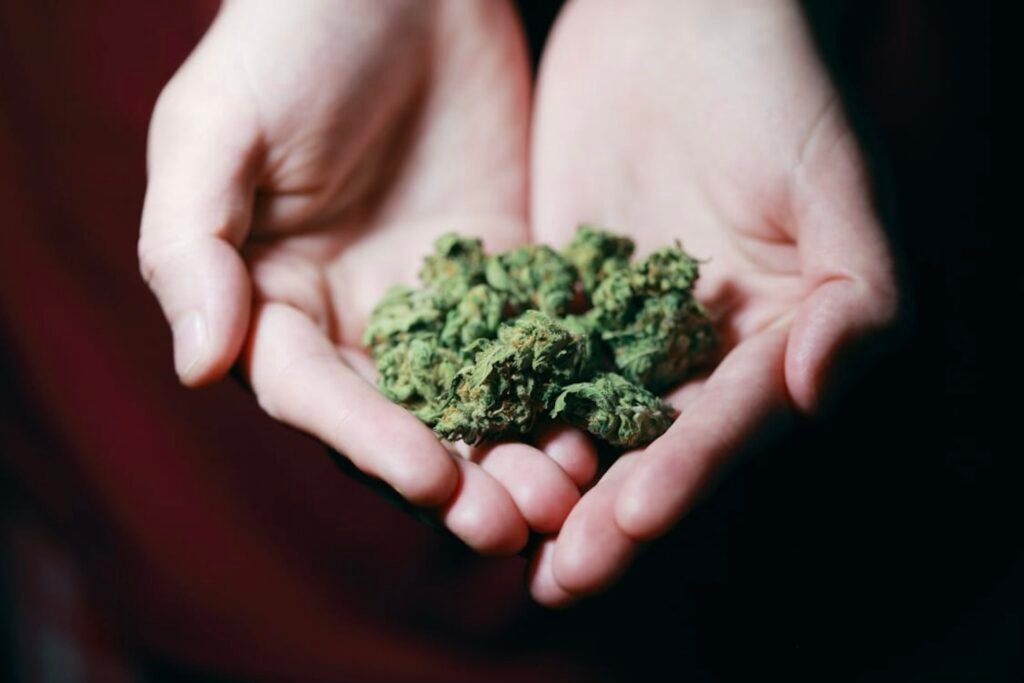
Cannabis is one of the most widely consumed drugs in Europe. Technically, cannabis refers to the plant itself, while marijuana usually means the dried parts of the plant used for consumption. Some people see it as a natural way to relax or have fun, while others worry about its effects on health, especially on the developing brain in young people.
But what does science really say? And what does Luxembourg’s new law allowing recreational cannabis mean exactly? Let’s explore what researchers have discovered about the effects of cannabis on the brain and how to reduce the risks if you choose to use it.
How does cannabis affect the brain?
Cannabis interacts with a special system in your body called the endocannabinoid system, which helps control mood, memory, sleep, and appetite. The main active chemical in cannabis is THC (short for delta-9-tetrahydrocannabinol). THC attaches to receptors in the brain called CB1 receptors, changing the way brain cells send messages (Albaugh et al., 2021).
What are the risks and (side) effects?
When you use cannabis, you might feel calm, happy, or giggly. But THC can also cause slower reactions, altered sensory perception, “fuzzy” thinking, or even anxiety, depending on the dose and your body’s sensitivity. These effects fade after a few hours, but while they last, they can impact tasks that require focus, like driving or studying. Also long-term risks such as addiction, psychosis (e.g. delusions, lost sense of reality) and depressive symptoms may be caused by the use of cannabis.
What happens if you start young?
Your brain is still developing well into your 20s and even beyond, especially in areas that control planning, decision-making, and memory. Using cannabis during this critical time may interfere with these processes (Broyd et al., 2016). A large European study found that teens who used cannabis showed changes in the prefrontal cortex, the part of the brain responsible for judgment and impulse control (Albaugh et al., 2023). Another long-term study revealed that heavy cannabis use starting in adolescence was linked to lower IQ and weaker memory in adulthood compared to those who didn’t use it (Meier et al., 2012).
Bottom line: The earlier you start using cannabis, the higher the risk of lasting negative effects on how your brain works.
What happens with heavy or long-term use?
Occasional cannabis use is different from using it every day. Research shows that heavy, long-term use can cause changes in thinking, mood, and brain structure. Some studies found that people who used cannabis regularly had more trouble with memory and learning (Broyd et al., 2016). Long-term users also seem more likely to experience anxiety, depression, and psychotic symptoms, especially if they use high-THC products or have a family history of mental illness (Batalla et al., 2019). The positive news: some brain changes can improve after stopping cannabis. Studies show that blood flow and brain function can recover within weeks or months of quitting (Meier et al., 2012).
Luxembourg’s step toward legalization
In July 2023, Luxembourg became the second EU country (after Malta) to regulate recreational cannabis under strict rules (Police Lëtzebuerg, 2023). Unlike the Netherlands, where cannabis is only tolerated – not legalized -Luxembourg’s law formally permits home cultivation. In Luxembourg, households are allowed to cultivate up to four cannabis plants. Consumption is restricted to adults and must take place exclusively at home. Use by minors, selling cannabis or smoking it in public remains illegal.
Regulation doesn’t mean cannabis is harmless, it just changes how we handle it. Luxembourg’s system focuses on education, safety, and research, not on open commercial sales. This approach fits with what scientists recommend, to protect minors, whose brains are still developing; to help adults make informed choices; to track health outcomes to guide policy. By combining freedom with responsibility, Luxembourg aims to strike a balance between personal choice and community health. To study how legalization affects public health, consumption patterns, and mental well-being, the government launched a scientific investigation (National Drug Report 2024).
Cannabis use: What should I know?
We consulted our partners and local experts at CNAPA (Centre National de Prévention des Addictions), Luxembourg’s national center for addiction prevention, to provide evidence-based information on what you should know about cannabis use.
They explained that there is no risk-free consumption of legal or illegal drugs. The effects of cannabis—or any substance—depend on many factors: how it’s consumed, dose, age, gender, environment, mood, experience, and expectations. Consumption can lead to addiction and is strongly discouraged:
- During adolescence (critical physical and mental development)
- When driving or doing activities requiring a clear head (e.g., sports, operating machinery)
- At work or school
- During pregnancy and breastfeeding
- If you have medical conditions
Extra caution is needed if:
- The product quality is unknown or cannot be checked
- You combine cannabis with alcohol or other drugs
- You take medication at the same time
If you decide to use Cannabis, here are some science-based tips to help reduce risks:
- Use less and less often: Occasional use causes fewer problems than daily use (Broyd et al., 2016).
- Choose lower-THC products: High-THC cannabis has stronger effects and higher risk of anxiety (Batalla et al., 2019).
- Avoid driving or risky activities: Coordination and reaction time are slower after using cannabis — sometimes for several hours. Be aware that you may legally not be permitted to drive for several days after consumption, as blood tests may still detect cannabis after that time.
- Don’t mix with alcohol or other drugs: This combination can be dangerous and make side effects worse.
- Keep use private and away from minors: Luxembourg’s law allows use only in private: Keep products and plants secure.
- Pay attention to how you feel: If cannabis starts causing anxiety or low motivation, take a break or talk to a healthcare provider.
- Take tolerance breaks: Short breaks help your brain reset and reduce dependence.
In conclusion, cannabis can change the way the brain works — sometimes in pleasant ways, sometimes not. For most adults who use it occasionally and responsibly, the effects are mild and short-term. But for young people or heavy users, cannabis can affect learning, memory, and mental health in lasting ways. Remember: cannabis may seem to be a “natural drug”, but it still affects your brain. Understanding how it works helps you make smarter, safer choices.
Want more information about cannabis?
We recommend visiting CNAPA’s drug encyclopedia: https://www.cnapa.lu/fr/lexique-des-drogues/cannabis
Need help or know someone who does?
Find support here: https://www.zev.lu/unterstuetzung-fuer/betroffene/
For better readability of the text, the assistance of Microsoft Copilot, an AI language model based on the GPT-4 architecture, secured with UL enterprise data protection, has been used.
- Albaugh, M. D., Ottino-Gonzalez, J., Sidwell, A., Lepage, C., Juliano, A., Owens, M. M., Chaarani, B., Spechler, P., Fontaine, N., Rioux, P., Lewis, L., Jeon, S., Evans, A., D’Souza, D., Radhakrishnan, R., Banaschewski, T., Bokde, A. L. W., Quinlan, E. B., Conrod, P., . . . Garavan, H. (2021). Association of Cannabis Use During Adolescence With Neurodevelopment. JAMA Psychiatry, 78(9), 1031. https://doi.org/10.1001/jamapsychiatry.2021.1258
- Batalla, A., Janssen, H., Gangadin, S. S. & Bossong, M. G. (2019). The Potential of Cannabidiol as a Treatment for Psychosis and Addiction: Who Benefits Most? A Systematic Review. Journal Of Clinical Medicine, 8(7), 1058. https://doi.org/10.3390/jcm8071058
- Broyd, S. J., Van Hell, H. H., Beale, C., Yücel, M. & Solowij, N. (2015). Acute and Chronic Effects of Cannabinoids on Human Cognition—A Systematic Review. Biological Psychiatry, 79(7), 557–567. https://doi.org/10.1016/j.biopsych.2015.12.002
- CNAPA, n.d. Cannabis Know-How 3. Retrieved 8 January 2026 from https://www.cnapa.lu/de/kampagnen/cannabis-know-how/cannabis-know-how-3.
- CNAPA, n.d. Drug encyclopedia. Retried 8 January 2026 from https://www.cnapa.lu/en/drug-encyclopedia/cannabis.
- Meier, M. H., Caspi, A., Ambler, A., Harrington, H., Houts, R., Keefe, R. S. E., McDonald, K., Ward, A., Poulton, R. & Moffitt, T. E. (2012). Persistent cannabis users show neuropsychological decline from childhood to midlife. Proceedings Of The National Academy Of Sciences, 109(40). https://doi.org/10.1073/pnas.1206820109
- Berndt, N., Kugener, T., Gorges, L., Ammermann, I., Wiltgen, L., & Origer, A. (2025). National Drug Report 2025: The drug phenomenon in the Grand Duchy of Luxembourg: Trends and developments. Government of the Grand Duchy of Luxembourg, Ministry of Health & Social Security, Directorate of Health. https://santesecu.public.lu/dam-assets/fr/publications/r/rapport-national-drug-2025/rapport-relis2024-en.pdf [santesecu.public.lu]
- Police Lëtzebuerg (2023). Neue Regeln für den Konsum und den Anbau von Cannabis [New rules for use and cultivation of cannabis]. Retrieved 8 January from https://police.public.lu/de/actualites/2023/07/semaine-30/dispositions-cannabis-de.html