Author: Mia Max | Editor: Laure Pauly
Hobbies can involve a wide range of processes that are relevant to our brain health. But what exactly makes them so valuable? Between work, studies, and everyday responsibilities, finding time for ourselves can sometimes feel like a luxury. But making room for activities we genuinely enjoy may be more important than we think. Research suggests that creative activities are associated with relaxation (1). In interviews, people also described a sense of accomplishment from pursuing hobbies (2). They allow us to explore personal interests, develop new skills, and experience progress without the pressure of external expectations. (1)
Do all hobbies engage us in the same way?
No. While many hobbies can be beneficial, they do not all challenge the brain in the same way. Some primarily involve physical activity, others rely on creativity, learning, social interaction, or a combination of these. For example:
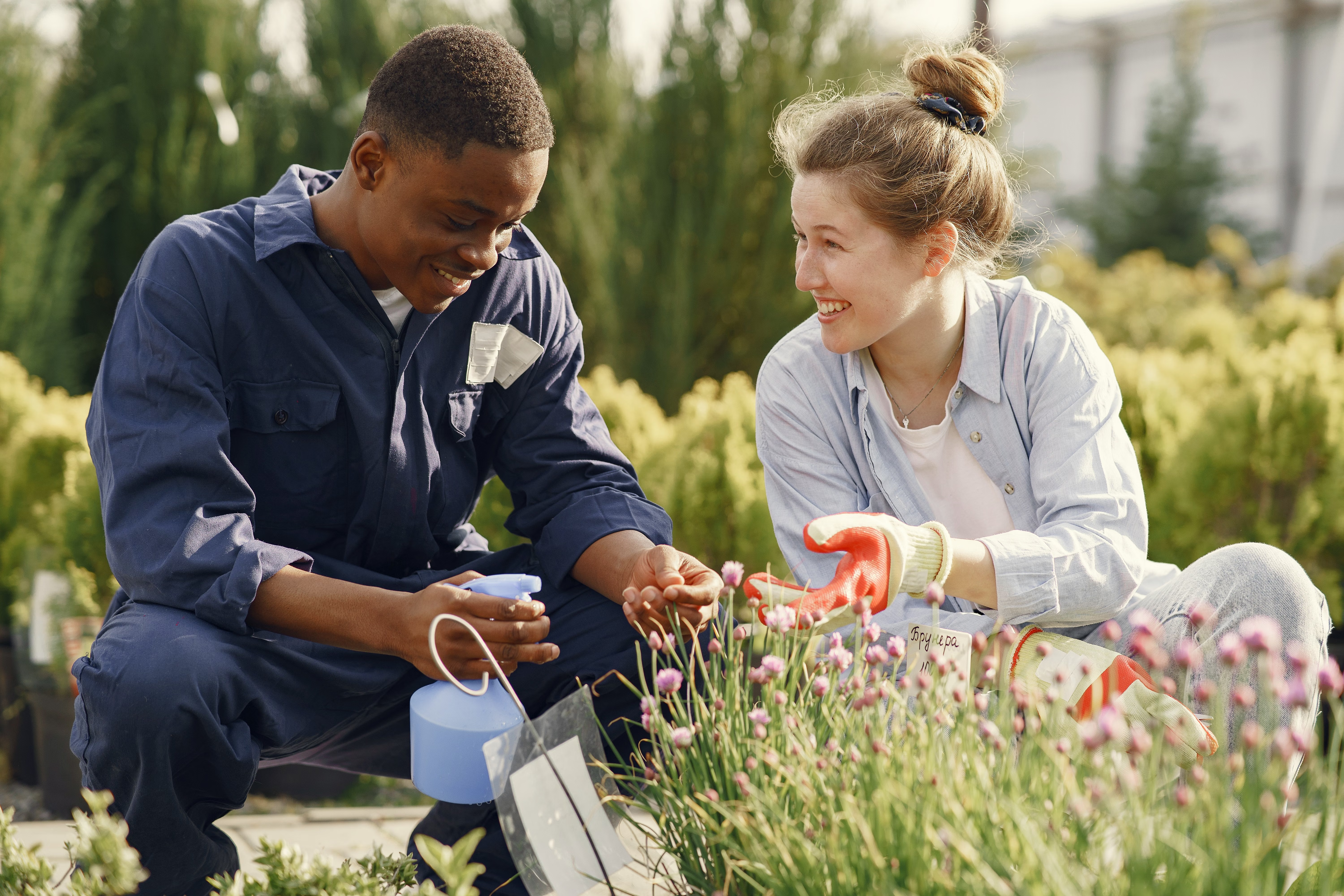
- Gardening, combines physical movement, practical tasks, and time outdoors. Research has also linked gardening to better cognitive functioning in older adults. (3)
- Dancing combines physical activity with mental and social engagement. Research on dance interventions suggests a positive, yet small, effect on cognition and on depression in adults aged 60 and over. (4)
- Playing a musical instrument challenges us to learn and remember melodies, follow rhythms, and coordinate precise movements. A review reported an association between playing music and better cognitive outcomes in older adults without cognitive impairment. However, the mechanisms underlying this association are not yet fully understood (5).
- Volunteering can increase opportunities for social interaction, physical activity, and mental engagement. Research suggests that these experiences may contribute to well-being and healthy ageing through a range of psychological and biological pathways. The rewarding feeling of helping others is sometimes described as the Helper’s High, which you should explore further in our article on how volunteering affects your brain.
Although many of the studies cited here were conducted in older adults, this does not mean that these activities are only beneficial later in life. Physical, social, creative, and mentally engaging activities can support well-being and cognitive health across the lifespan.
Importantly, no single hobby has been proven to be the “best” for brain health. Activities that combine several elements, such as physical activity, learning, creativity, and social interaction, may provide a broader range of benefits. However, the most important factor is choosing activities that you enjoy and can maintain over time.
Do creative hobbies help keep the brain younger?
They might. Recent research on creative experiences, including dance and music, has found associations between brain connectivity patterns and a lower estimated brain age. Although these findings don’t show that creative activities slow brain ageing, they suggest a promising connection between creative engagement and brain health. (6)
These findings should be interpreted cautiously because the study found an association rather than a cause-and-effect relationship. Nevertheless, they add to growing evidence that creative activities may play a meaningful role in supporting brain health throughout life.
While some hobbies involve music, movement or social interaction, many people enjoy quieter activities that engage the brain in a different way.
What does hand-crafting do for our brain?
Not every hobby requires special equipment, a group of people, or even leaving the house. Activities such as knitting, crocheting, drawing, sewing, or folding origami can be surprisingly engaging, despite their simplicity. And while your hands are busy creating something, several processes are taking place in your brain. Think about drawing a picture: your brain needs to process what you see, plan what you want to create, and coordinate your hand movements. Neuroscientific research shows that drawing involves multiple brain regions working together to process visual information, plan actions, and control movements. (7)
Research investigating pottery practice, for instance, found changes in the functioning of the motor cortex, a brain region involved in controlling movements, as participants learned to shape clay with increasing precision. (8)
This becomes particularly interesting when we consider neuroplasticity, the brain’s ability to adapt and change in response to new experiences and learning. As we practice unfamiliar skills and develop new abilities, the way different brain regions function can change. So, the next time you try something new with your hands, remember that you’re not just learning a new skill, you’re also giving your brain an opportunity to adapt.
The feeling of “I made this!”
Beyond the neural processes involved, there’s another reason why hands-on hobbies can be so rewarding. Do you remember the feeling you had after the last time you crafted something with your own hands? Think about the satisfaction of finishing your first knitted scarf, making a birthday card, or completing a painting. The result might not be perfect but knowing that you’ve created something yourself can bring a genuine sense of accomplishment. This experience connects to an important psychological concept called self-efficacy! It describes our belief in our ability to overcome challenges and achieve goals through our own actions. (9)
Research on creative art-making has found that even relatively brief creative activities can be accompanied by improvements in self-efficacy and positive emotions. (10) Other findings suggest that feelings of freedom, influence, and empowerment during creative activities may help explain their positive associations with self-efficacy and well-being. (11)
You could start now!
Luckily, exploring a new hobby doesn’t have to be expensive, time-consuming, or complicated. You don’t need professional art supplies, expensive classes, or years of experience to get started. A pencil, some paper, or a ball of yarn might be everything you need. And there is no need to aim for perfection.
So why not try something new this week already? Taking care of your brain doesn’t always have to feel like another task on your to-do list. Sometimes it can be as simple as doing something you enjoy.
For better readability of the text, the assistance of Microsoft Copilot, an AI language model based on the GPT-4 architecture, secured with UL enterprise data protection, has been used.
- Eschleman, K. J., Madsen, J., Alarcon, G., & Barelka, A. (2014). Benefiting from creative activity: The positive relationships between creative activity, recovery experiences, and performance-related outcomes. Journal of Occupational and Organizational Psychology, 87(3), 579–598. https://doi.org/10.1111/joop.12064
- Hashim, J., Yi, H., Foong, P. S., Tai, E. S., & Nolan, R. P. (2024). A qualitative study of daily activities that inform a process-based model of well-being among Singaporean adults. Journal of Patient-Reported Outcomes, 8, Article 12. https://doi.org/10.1186/s41687-024-00690-3
- Corley, J., Pattie, A., Deary, I. J., & Cox, S. R. (2024). Gardening and cognitive ageing: Longitudinal findings from the Lothian Birth Cohort of 1921. Journal of Environmental Psychology, 97, 102361. https://www.sciencedirect.com/science/article/pii/S0272494424001348
- Jaldin, M. A., et al. (2025). Systematic review and meta-analysis of the effects of dance on cognition and depression in healthy older adults. Medicine & Science in Sports & Exercise, 57(3), 490–500. https://doi.org/10.1249/MSS.0000000000003585
- Schneider, C. E., Hunter, E. G., & Bardach, S. H. (2019). Potential cognitive benefits from playing music among cognitively intact older adults: A scoping review. Journal of Applied Gerontology, 38(12), 1763–1783. https://doi.org/10.1177/0733464817751198
- Coronel-Oliveros, C., et al. (2025). Creative experiences and brain clocks. Nature Communications. https://doi.org/10.1038/s41467-025-64173-9
- Raimo, S., Santangelo, G., & Trojano, L. (2021). The neural bases of drawing: A meta-analysis and a systematic literature review of neurofunctional studies in healthy individuals. Neuropsychology Review. https://pubmed.ncbi.nlm.nih.gov/33728526/
- Forte, V., et al. (2025). Neural plasticity in early potters: Shape analysis and TMS-EEG co-registration trace the rise of a new motor skill. PLOS ONE. https://pubmed.ncbi.nlm.nih.gov/39823465/
- Bandura, A. (1995). Exercise of personal and collective efficacy in changing societies. In A. Bandura (Ed.), Self-efficacy in changing societies (pp. 1–45). Cambridge University Press. https://doi.org/10.1017/CBO9780511527692.003
- Kaimal, G., & Ray, K. D. (2017). Free art-making in an art therapy open studio: Changes in affect and self-efficacy. Arts & Health, 9(2), 154–166. https://doi.org/10.1080/17533015.2016.1217248
- Lange, G., Leonhart, R., Gruber, H., & Koch, S. C. (2018). The effect of active creation on psychological health: A feasibility study on (therapeutic) mechanisms. Behavioral Sciences, 8(2), 25. https://doi.org/10.3390/bs8020025