Mind your B.R.A.I.N.P.O.W.E.R.
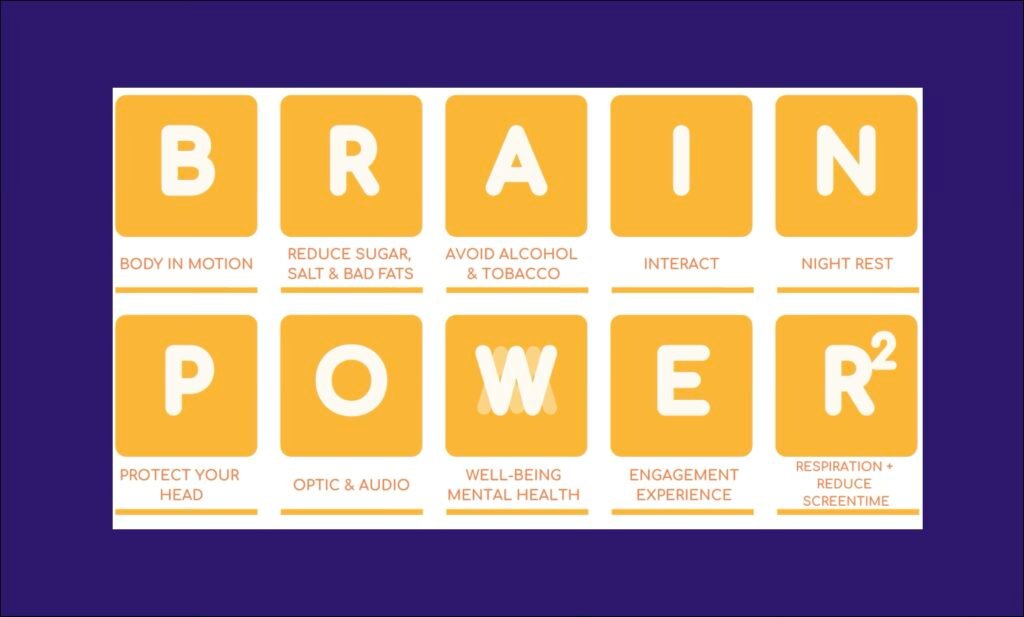
Most people have the same two questions when it comes to brain health: “What can I do to support my brain power TODAY?” and “What can I do to protect my brain for TOMORROW?”. As brain health experts, these are the questions we hear most often, in workshops, in conversations, even at dinner parties. People truly want to take care of their brains, but they often feel overwhelmed by scientific jargon, long lists of risk factors, contradictory tips, or headlines that change every week.
Stress: the hidden costs of the hustle culture

“How are you? Busy, but good.” Sound familiar? Stress has become a badge of honor in today’s hustle culture, where constant busyness is seen as success. Discover the hidden costs of hustle culture and how chronic stress impacts Brain Health. Learn how stress affects our brain health, and practical tips to manage stress effectively.
Loneliness: a silent threat to brain and body

Although loneliness is associated with social isolation, the two terms are not substitutable. Isolation is a measurable objective state, determined by the number of social contacts a person has. While different definitions of loneliness exist, it is most commonly defined as a negative subjective experience of lacking meaningful social connections.
Why time change scrambles your brain

On paper, it’s “just an hour.” But your brain thinks otherwise. That one-hour shift messes with your internal clock, your mood, your focus, and even your driving skills. Let’s break down why changing the clocks scrambles your brain, why light is the sneaky mastermind behind it all, and what you can do to survive the next switch.
Hypertension and cognition: managing blood pressure to protect the brain

Hypertension, high blood pressure, is when the pressure in your blood vessels is too high. It is often called the ‘silent killer,’ as it is a serious global health issue.
The science behind deep work and how to harness it

In today’s connected world, true focus has become a rare and valuable skill. Distractions are constant, from buzzing phones to email pings and the endless scroll of social media. Yet science tells us that if we can carve out time for focused, distraction-free thinking, we can reach a mode of productivity and creativity known as deep work.
Brain on sugar: The sweet myth of the sugar rush

Who hasn’t experienced it: kids overly energetic at a birthday party after indulging in cake, candy, and soda? Or maybe you’ve felt that sudden jolt of energy after a sugary snack yourself. But what if we tell you that this so-called “sugar rush” is more myth than reality?
Commuting: How your daily travel shapes your brain

Commutes, errands, and school runs often feel like wasted time. But science says otherwise: daily travel shapes your mood, brain health, and overall happiness.
Retirement and brain health: What science tells us about this major life transitions

For decades, we work toward it—retirement. It’s often painted as the golden chapter of life: No more early alarms, no more deadlines. Just time to enjoy life to the fullest. But what happens when that day starts to feel a little too close for comfort? What should we expect from retirement, and more importantly, how does it affect our brain health? How can we best prepare for it?
Is digital detox THE solution? A brain-healthy guide to using technology wisely

In an age where smartphones are our constant companions and social media beckons us at every idle moment, it’s easy to forget how much screen time affects our well-being.